
You may be sitting next to your dog right now, watching them sleep between water breaks, medication times, and short trips outside. For a while, Cushing’s disease may have felt like something you could manage. You adjusted routines, cleaned up accidents, filled prescriptions, and kept going because your dog was still, in many ways, still your dog.
Then something changes. The panting doesn’t settle. The restlessness feels different. Your companion seems tired in a deeper way, or less interested in the people and rituals they’ve always loved. That’s often when families start searching for answers about when to euthanize a dog with Cushing’s disease, not because they’re giving up, but because they want to protect their dog from unnecessary suffering.
If that’s where you are, your concern is an act of love. This decision usually isn’t about choosing a date on a calendar. It’s about recognizing when treatment is no longer preserving comfort and when the kindest care shifts from managing a chronic illness to protecting dignity at the end of life.
Table of Contents
- A Loving Companion’s Journey with Cushing’s Disease
- Understanding How Cushing’s Disease Progresses
- Key Signs Your Dog’s Quality of Life Is Declining
- A Practical Framework for Your Compassionate Decision
- Exploring Hospice and Palliative Comfort Care
- The Peaceful Goodbye What to Expect with In-Home Euthanasia
- Aftercare Options and Honoring Your Grief
- Frequently Asked Questions
- How do I know when it’s time to euthanize my dog with Cushing’s disease
- Is my dog suffering even if they still wag their tail sometimes
- Should I wait through one more medication change
- What if my dog seems okay one day and much worse the next
- What if my family disagrees about timing
- Is choosing euthanasia giving up
- Can children be included in the goodbye
- What if I feel guilty afterward
A Loving Companion’s Journey with Cushing’s Disease
Caring for a dog with Cushing’s often begins with commitment and hope. Families learn the rhythm of pills, follow-up visits, extra laundry, and middle-of-the-night potty trips. Many do this for months or years with remarkable devotion. They know which foods still tempt appetite, which bedding is easiest on thin skin, and how to read the difference between a tired day and a troubling one.
What makes the later stage so painful is that the change is rarely dramatic at first. A dog who used to greet you at the door now lifts their head but doesn’t get up. A favorite short walk becomes a few slow steps into the yard. A pet who once seemed hungry all the time may begin refusing food, sleeping poorly, or seeking quiet corners away from the family.

That’s the moment many loving people start doubting themselves. They worry they’re acting too soon. Then on a slightly better day, they worry they’ve waited too long even to think about it. Both feelings are common.
Practical rule: The question usually changes before the answer becomes clear. Early on, families ask, “How do we treat this?” Later, they ask, “Is my dog still comfortable living this way?”
With Cushing’s disease, the hardest part is that symptoms can creep forward while everyone keeps adapting. What used to feel manageable can become exhausting for the dog and for the people providing care. Financial strain, caregiver fatigue, and the constant work of cleanup and monitoring all matter. They don’t mean you love your dog less. They’re part of the full picture.
A compassionate decision comes from looking clearly at your dog’s comfort, not from trying to prove how much more your family can endure. For many dogs, the final gift is not one more treatment cycle. It’s relief before suffering becomes overwhelming.
Understanding How Cushing’s Disease Progresses
A dog with Cushing’s disease can look fairly stable for months, then gradually become a dog who spends more of the day coping than enjoying. That shift is easy to miss because it usually happens in small pieces. A little more panting. A little less stamina. More accidents, more skin trouble, more interrupted sleep.
Cushing’s is usually a chronic, progressive disease. Treatment can control signs and give many dogs good time, but it does not stop the underlying process forever. For some families, that means years of management. For others, the course changes sooner because the medication no longer keeps symptoms in a comfortable range, the body grows weaker, or another complication begins to drive daily life.
The most helpful question is not how long dogs can live with Cushing’s. It is whether your dog is still living in a way that feels like your dog.
When treatment is still serving your dog
In the earlier phases, many dogs still enjoy meals, family time, short walks, and rest. They may drink and urinate more, pant more than they used to, lose muscle, or develop thinning hair and fragile skin. Those changes matter, but they do not automatically mean a dog is nearing the end.
What I want families to watch for is the point where management stops feeling like support and starts feeling like rescue. If each week brings more cleanup, more discomfort, more medication adjustments, and fewer good hours, the goal of care often needs to change. At that point, it helps to track patterns with a daily quality of life assessment tool so you can see the trend clearly instead of relying on one hopeful afternoon.
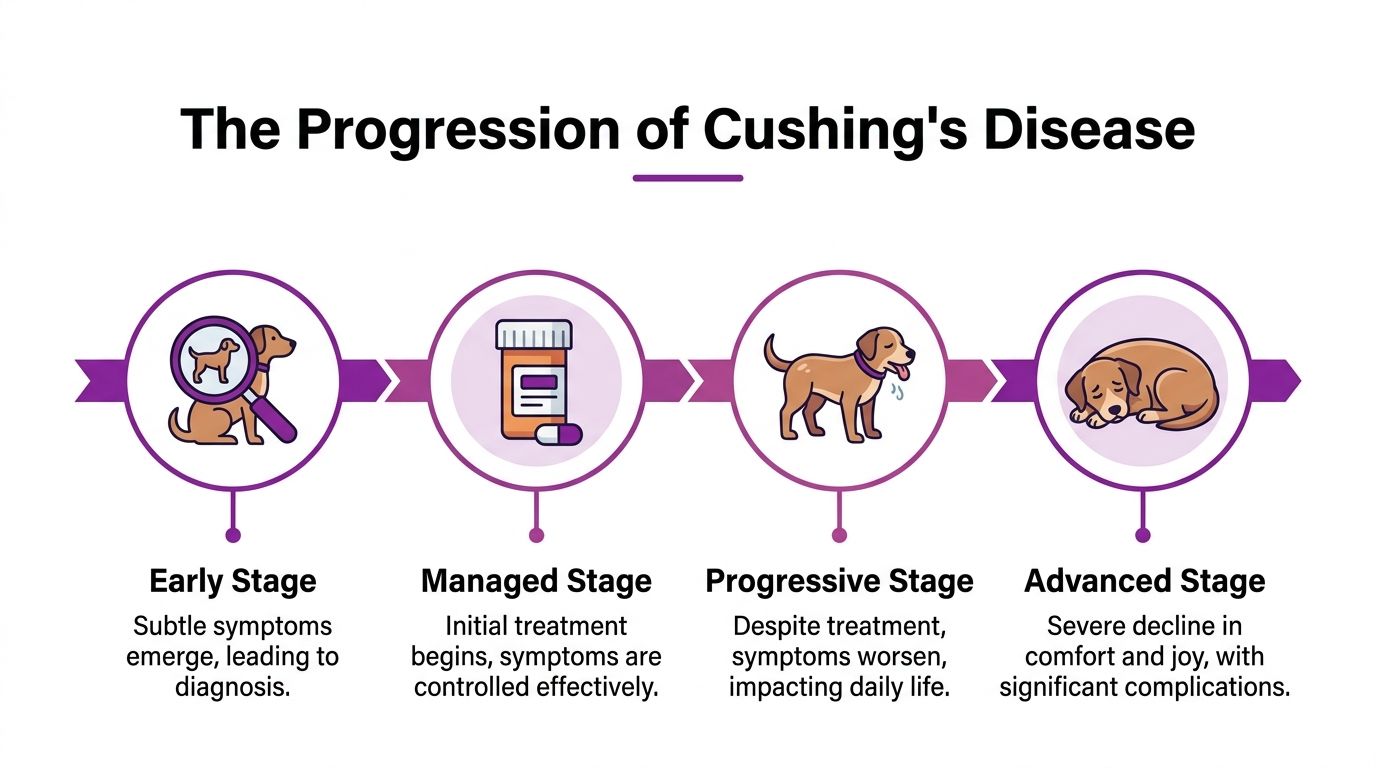
Here is a practical way to view the usual course:
| Phase | What families often see | What matters most |
|---|---|---|
| Early | Symptoms emerge and testing begins | Getting a clear diagnosis and treatment plan |
| Managed | Medications help control signs | Preserving comfort, routine, and enjoyment |
| Progressive | Symptoms return or worsen despite care | Deciding whether treatment is still helping more than it burdens |
| Advanced | Daily function and interest fall sharply | Shifting focus to comfort, dignity, and relief from suffering |
When the disease stops acting like a chronic condition
Some dogs decline in a slow, predictable way. Others develop a more serious turn that changes the decision-making quickly. A growing pituitary tumor can lead to neurologic problems such as circling, disorientation, vision changes, seizures, or loss of normal awareness. In an adrenal form of the disease, weakness, collapse, bleeding, or abdominal complications may create a sudden crisis. The Merck Veterinary Manual overview of hyperadrenocorticism in dogs explains these forms and complications in more medical detail.
This is often the point where families move from chronic illness management to hospice thinking. The question changes from, “What else can we treat?” to, “How do we protect comfort and dignity now?” Choosing euthanasia in that stage is not giving up. It is choosing to prevent fear, distress, and a harder death later.
A rough day can happen with any chronic illness. Seizures, sudden confusion, collapse, loss of bodily control, or rapid neurologic change call for urgent veterinary guidance the same day.
Key Signs Your Dog’s Quality of Life Is Declining
A dog with Cushing’s can live with chronic symptoms for quite a while. Then a quieter change happens. The day stops containing real comfort.
That shift matters more than any single bad afternoon. Families often ask me whether they are looking at “the end” or just a setback. I tell them to watch for a pattern of decline that no longer responds to rest, medication adjustments, routine care, or the things your dog used to enjoy. That is often the point where care begins to shift from managing disease to protecting comfort and dignity.

The signs families notice first
The clearest signs usually show up at home, during ordinary moments. Your dog may still have a decent hour or a decent morning. What concerns me more is when the hard parts start to define the day.
Common signs include:
- Loss of interest in daily life: Your dog no longer greets you, seeks affection less often, ignores favorite routines, or seems disconnected from the household.
- Persistent distress: Panting at rest, pacing, repeated repositioning, trembling, poor sleep, or inability to settle often mean your dog is uncomfortable even when nothing active is happening.
- A meaningful change in appetite or drinking: Many dogs with Cushing’s have been very food-motivated for months or years. A noticeable drop in eating, difficulty keeping food down, or refusal to drink signals a serious change.
- Loss of cleanliness and skin comfort: Frequent accidents, urine scald, chronic dampness, skin irritation, or repeated messes that your dog cannot avoid can erode both comfort and dignity.
- Mental or social withdrawal: Some dogs become unusually needy. Others hide, stare into space, seem confused, or stop engaging with the people they love.
- Weakness and reduced mobility: Trouble rising, walking, squatting, or changing position can turn basic body functions into exhausting work.
- Breathing that looks hard: Fast, labored, or strained breathing at rest deserves prompt veterinary attention.
A structured daily quality of life assessment tool can help you keep a clear record of what your dog is living through each day.
I also ask families to watch for recovery. Does your dog bounce back after a rough spell, or do they stay depleted? If a nap no longer helps, a favorite treat no longer brings interest, and a quiet evening no longer restores them, the disease may no longer be something your dog is living with comfortably. It may be something they are being worn down by.
For a deeper visual overview, this short video can help families think through the signs they’re seeing at home.
Red flags that need urgent attention
Some changes mean you should contact a veterinarian right away, not wait to see how tomorrow goes.
Watch especially for:
- Refusing food or water for a sustained period: This goes beyond a picky meal or one off day.
- Inability to stand or repeated collapse: If your dog cannot get up, cannot stay up, or falls repeatedly, comfort and safety are already severely compromised.
- Seizures or severe neurologic episodes: Especially if your dog does not return to a calm, aware baseline afterward.
- Infections that keep returning or do not respond to treatment: Skin and urinary infections are common in Cushing’s disease and can become exhausting, painful, and difficult to control.
- Breathing distress: Open-mouth breathing, marked effort at rest, or sudden respiratory change needs immediate veterinary guidance.
When families ask me what suffering looks like in a dog with Cushing’s disease, I usually bring it back to this. A body that can no longer rest comfortably, stay clean, eat with interest, move without struggle, or recover from a bad spell is telling us that continued treatment may be prolonging decline more than preserving life. In that moment, choosing euthanasia can be a loving decision made to prevent the next crisis, not just to respond to the one already in front of you.
A Practical Framework for Your Compassionate Decision
One of the hardest parts of living with Cushing’s is that decline is often uneven. A dog can have a pleasant afternoon, then a miserable night. Families hold tightly to the bright moments, which is completely natural, but those moments can make it harder to see when care has shifted from managing a chronic illness to protecting comfort at the end of life.
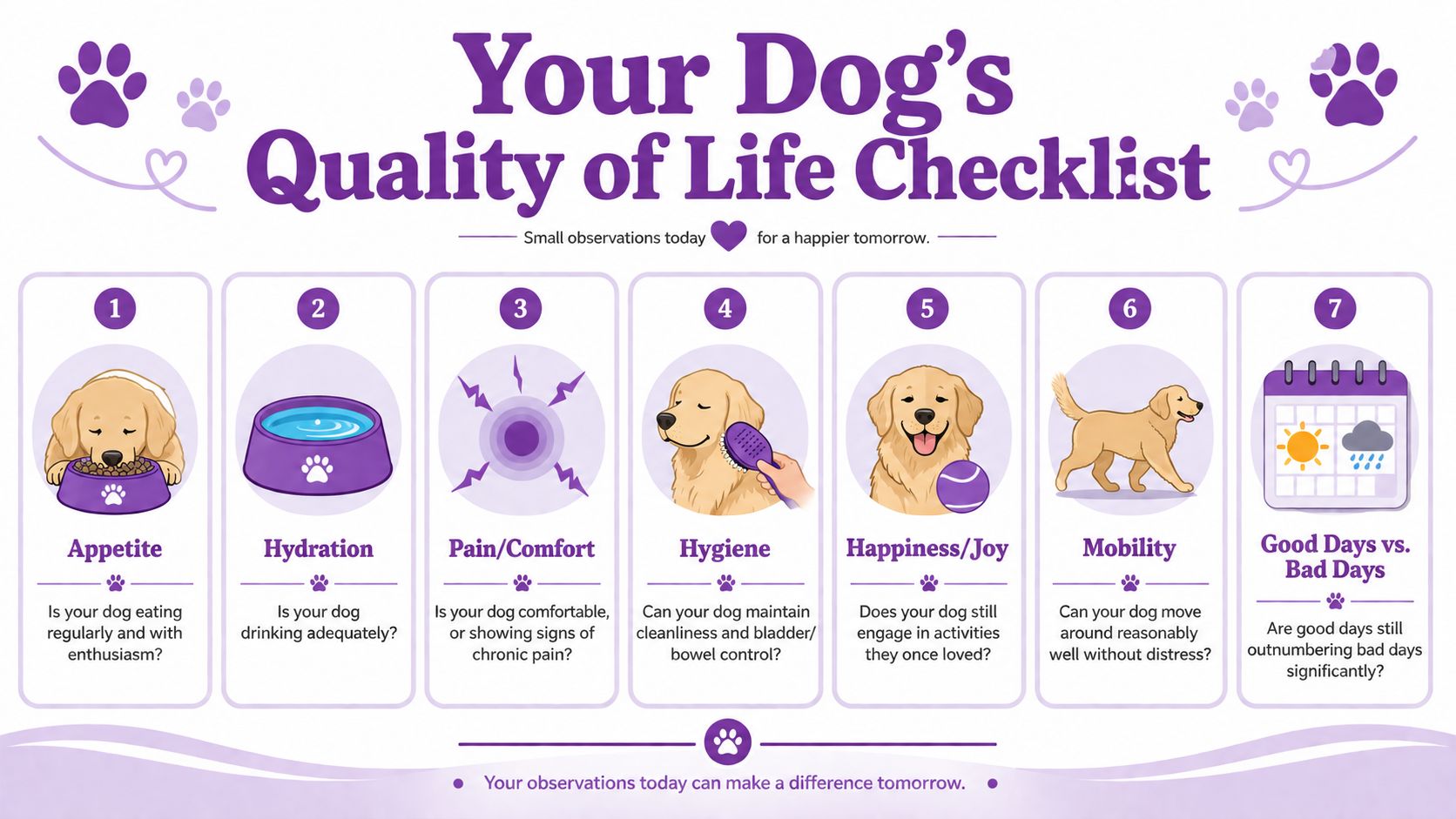
A written record helps you judge your dog’s actual days, not your hopes or fears about them. I recommend this often in hospice work because it gives families something steady to return to when emotions are running high.
Use a daily record instead of relying on memory
Keep it simple. A notebook, phone note, or calendar is enough. The goal is not to produce a perfect log. The goal is to notice whether your dog is still having a life they can enjoy, or whether each day is becoming more work, more distress, and less dignity.
Check in once a day at about the same time and score the day in a few practical areas:
-
Appetite
Did your dog eat willingly, or only after repeated encouragement? Did food still seem enjoyable? -
Hydration
Were they drinking in their usual pattern for this stage of disease, or were they beginning to avoid water? -
Comfort
Could they sleep, settle, and rest, or were they panting, pacing, trembling, or unable to get comfortable? -
Hygiene
Could they stay reasonably clean and dry, or were accidents and skin irritation becoming frequent and difficult to manage? -
Connection
Did they still seek out family, respond to affection, or show interest in familiar routines? -
Mobility
Could they get up, walk, and change position without major strain or repeated assistance? -
Overall day
Mark the day as good, mixed, or bad.
Short notes work best. One line per category is plenty.
What to write down each day
A daily entry might look like this:
| Area | Example of what to note |
|---|---|
| Appetite | Ate breakfast well, refused dinner |
| Comfort | Panting at rest most of evening |
| Mobility | Needed help up twice, slipped outside |
| Hygiene | Large overnight urine accident, skin irritated |
| Joy | Wagged for family, ignored toy |
| Overall day | Mixed, more difficult than yesterday |
After several days, step back and look for the pattern. Are the bad days clustering closer together? Is your dog recovering less after a hard day? Are you spending more time preventing distress than your dog is spending enjoying life? Those are the questions that often clarify the decision.
This is also the point where many families benefit from reading about how pet hospice supports comfort-focused care at home. It helps define what can still be supported well, and what may be asking too much of your dog.
One sign deserves special weight. If your dog can no longer rise without help and that weakness is not improving, the balance often shifts. At that stage, families are no longer deciding only how to manage Cushing’s disease. They are deciding whether continued care still protects comfort, or whether a peaceful goodbye would spare their dog the next frightening crisis.
If your notes show that comfort is shrinking, recovery is brief, and dignity is getting harder to maintain, euthanasia is not giving up. It is a loving decision to prevent suffering that you can already see approaching.
Exploring Hospice and Palliative Comfort Care
Hospice changes the question from “How do we fight this disease?” to “How do we protect comfort now?” For many families, that shift brings relief. It gives them permission to stop chasing control and start focusing on what their dog feels each day.
That doesn’t mean doing less. It often means doing more of what matters.

What comfort-focused care looks like
Palliative care for a dog with Cushing’s may include adjusting routines to reduce anxiety and strain, helping with mobility, protecting thin or irritated skin, keeping bedding clean and dry, and supporting eating and drinking in ways that feel easy and familiar.
It can also mean stepping back from interventions that no longer improve the dog’s lived experience.
Examples of comfort-focused support include:
- Mobility help: Rugs for traction, slings for short transfers, and fewer stairs.
- Rest support: Softer bedding, cooler resting areas for dogs who pant, and easy access to family.
- Hygiene care: Gentle bathing, clipping soiled fur, and frequent bedding changes.
- Symptom monitoring: Paying close attention to sleep, breathing, appetite, and recovery after activity.
Many families benefit from reading more about what pet hospice is and whether it’s right for your pet, especially when they’re trying to decide whether there is still a comfortable window worth protecting.
What hospice does and does not mean
Hospice is not surrender. It is a deliberate medical and emotional choice to prioritize ease, familiarity, and dignity. It supports both the patient and the family.
Sometimes the most loving medical plan is the one that asks less of a failing body.
What doesn’t work well is using hospice language while still expecting your dog to return to an earlier stage of illness. Comfort care can create meaningful time. It cannot reverse progressive decline. When families accept that truth, they often become better able to recognize the moment when a peaceful passing is kinder than continued management.
The Peaceful Goodbye What to Expect with In-Home Euthanasia
Families often fear the unknown more than the decision itself. They want to know whether their dog will be afraid, whether the process is painful, and whether home is really a better setting. Those are loving questions.
For many pets, being in familiar surroundings helps lower stress. Home smells right. The bed is familiar. Family members can gather, and there’s no car ride, waiting room, or slippery clinic floor.
A calm setting matters
A peaceful goodbye at home allows the pace to slow down. Families can choose a favorite room, a sunny porch, a shady yard, or the couch where their dog always rested. Some people want music. Others want silence. Some want children present. Others prefer a quieter gathering.
There isn’t one right way to do this. There is only the way that feels most respectful to your dog and your family.
If you’d like a fuller overview, this guide on what to know about in-home pet euthanasia and aftercare in 2026 can help you prepare thoughtful questions in advance.
How the process usually unfolds
In-home euthanasia is typically a gentle two-step process. First, the veterinarian gives sedation so your dog becomes very relaxed and drifts into a deep, peaceful sleep. This part matters. It allows the body to soften and the family to spend a few quiet moments without struggle or urgency.
After your dog is fully sedated and no longer aware, the final medication is given. The passing is peaceful.
Many families are surprised by how calm the room feels. They’ve been carrying tension for weeks or months, and in that moment, their dog is finally resting. That’s why so many people later describe euthanasia not as something done to their pet, but as a final act of protection.
What helps most is preparation:
- Choose the setting: Pick the place where your dog is most at ease.
- Think about who should be present: Keep the circle supportive and calm.
- Plan small comforts: A favorite blanket, treat, or gentle touch can matter.
- Discuss aftercare ahead of time: Making decisions in advance can reduce distress on the day itself.
A gentle transition doesn’t erase grief. It does spare many pets the fear and discomfort of a rushed crisis.
Aftercare Options and Honoring Your Grief
After your dog’s passing, families are often relieved to have simple, respectful guidance. Aftercare options commonly include private cremation, where your pet’s ashes are returned to you, communal cremation, where ashes are not returned, and aquamation, a water-based form of aftercare that some families prefer for personal or environmental reasons.
You may also choose memorial keepsakes such as a paw print, fur clipping, urn, memorial jewelry, or a framed photo. Some families plant a tree, write a letter, or hold a quiet celebration of life at home. There is no wrong way to honor a cherished companion.
Grief after losing a pet can feel physical, disorienting, and lonely. If you need added support, this guide to holistic grief coping offers gentle ideas that many people find grounding while moving through loss.
Your bond with your dog doesn’t end with their death. It changes shape. Remembrance is one way love keeps going.
Frequently Asked Questions
How do I know when it’s time to euthanize my dog with Cushing’s disease
The question usually changes from, “Can we treat this?” to, “Is my dog still comfortable living this way?” That shift matters.
I advise families to look at the whole day. Can your dog rest, eat with interest, get up without major struggle, stay clean, and still enjoy affection, walks, or familiar routines? If those basic comforts are fading and care is starting to feel like rescue from one hard moment to the next, euthanasia may be the kindest choice.
Is my dog suffering even if they still wag their tail sometimes
Yes, they can be.
Dogs often keep greeting their people long after their body is failing them. A tail wag shows connection, not necessarily comfort. I tell families to put more weight on sleep, breathing, appetite, mobility, anxiety, house-soiling, and whether their dog seems settled in their own body.
Should I wait through one more medication change
Sometimes a brief, clearly defined trial is reasonable. It helps if you set a deadline and a goal before starting, such as better sleep, easier breathing, or more interest in food.
If you do not see meaningful improvement, more treatment can slide into more burden. At that point, the focus often needs to shift from managing disease to protecting comfort.
What if my dog seems okay one day and much worse the next
That is common in chronic illness near the end.
Families often hold onto the better day and hope it means recovery is starting. More often, it means the bad days are becoming interrupted by brief rallies. I encourage people to track the pattern over a week or two. The trend matters more than a single good afternoon.
What if my family disagrees about timing
Disagreement usually comes from love, grief, and fear, not from anyone caring less.
Choose one simple way to measure your dog’s daily experience. Write down appetite, sleep, mobility, accidents, enjoyment, and whether your dog seems peaceful or distressed. Shared notes can make the conversation gentler and more honest because everyone is looking at the same lived reality.
Is choosing euthanasia giving up
No. It is choosing to prevent further decline when comfort can no longer be preserved in a way your dog can understand or benefit from.
Many families wait for a dramatic crisis because they worry acting sooner means they failed. In hospice care, a peaceful goodbye before panic, collapse, or severe distress is often the more loving path.
Can children be included in the goodbye
Yes, if that fits your family.
Children usually do best with simple, truthful language. Tell them the dog’s body is no longer working well and the veterinarian is helping them die peacefully so they do not suffer. Give them a choice about being present, saying goodbye beforehand, drawing a picture, or helping pick a blanket or toy.
What if I feel guilty afterward
Guilt is one of the most common parts of loving a pet through the end of life. It does not mean you made the wrong choice.
People often replay the date, the hour, or one last look from their dog. I remind them to judge the decision by the full picture of decline, not by the wish that love alone could have kept their companion here longer.
If you have questions about your pet’s quality of life or want gentle guidance around hospice or a peaceful passing at home, Heartstrings Pet Hospice & In-Home Euthanasia is here to support your family with compassion, comfort, and dignity.





