For euthanasia at home, it's often late at night, with a tired dog sleeping on a blanket nearby or a cat tucked into a favorite chair, and a family asking the hardest question of all: “How do we help without causing more stress?”
If that's where you are, I want you to know something first. Looking for information doesn't mean you're giving up. It means you're trying to protect your beloved companion from fear, pain, and rushed decisions. That is an act of love.
Many families imagine this choice as one single moment. In reality, a peaceful goodbye at home is usually a series of gentle choices. Where your pet rests. Who is present. Whether you need time for one more quiet morning, one more meal, one more gathering with family. A good home visit makes room for those choices while keeping your pet's comfort at the center.
Hospice care and euthanasia aren't opposites. Hospice focuses on comfort, symptom relief, and meaningful time together. Euthanasia becomes part of that conversation when comfort can no longer be preserved in a way that feels fair to the pet. The goal is always the same: dignity, peace, and honoring the bond you share.
What follows is a clear, step-by-step guide in plain language. I'll walk through what euthanasia at home means, how the medical process usually works, how families often personalize the experience, what to prepare on the day, and how aftercare decisions can be made with less pressure and more clarity.
Table of Contents
- A Gentle Introduction to Saying Goodbye at Home
- Understanding Euthanasia at Home and Why Families Choose It
- How the Peaceful Passing Process Works Step by Step
- Personal Choices That Shape a Comforting Goodbye
- Scheduling Preparation and What to Expect on the Day
- Aftercare Cremation and Memorial Options Explained
- Quality of Life Guidance Costs and Questions to Ask Your Veterinarian
A Gentle Introduction to Saying Goodbye at Home
A family once told me they knew it was time to ask questions when their old Labrador stopped coming to the kitchen at breakfast. He still wagged when they touched him. He still loved being near them. But the easy joy of his day had narrowed, and everything seemed to take more effort.
That kind of change is often what brings people here.
Why home can feel different
For many pets, home is where they feel safest. It smells familiar. Their body already knows where the soft spots are. There's no car ride, no lobby, no slippery floor, no need to gather strength for one more outing when strength is already hard to find.
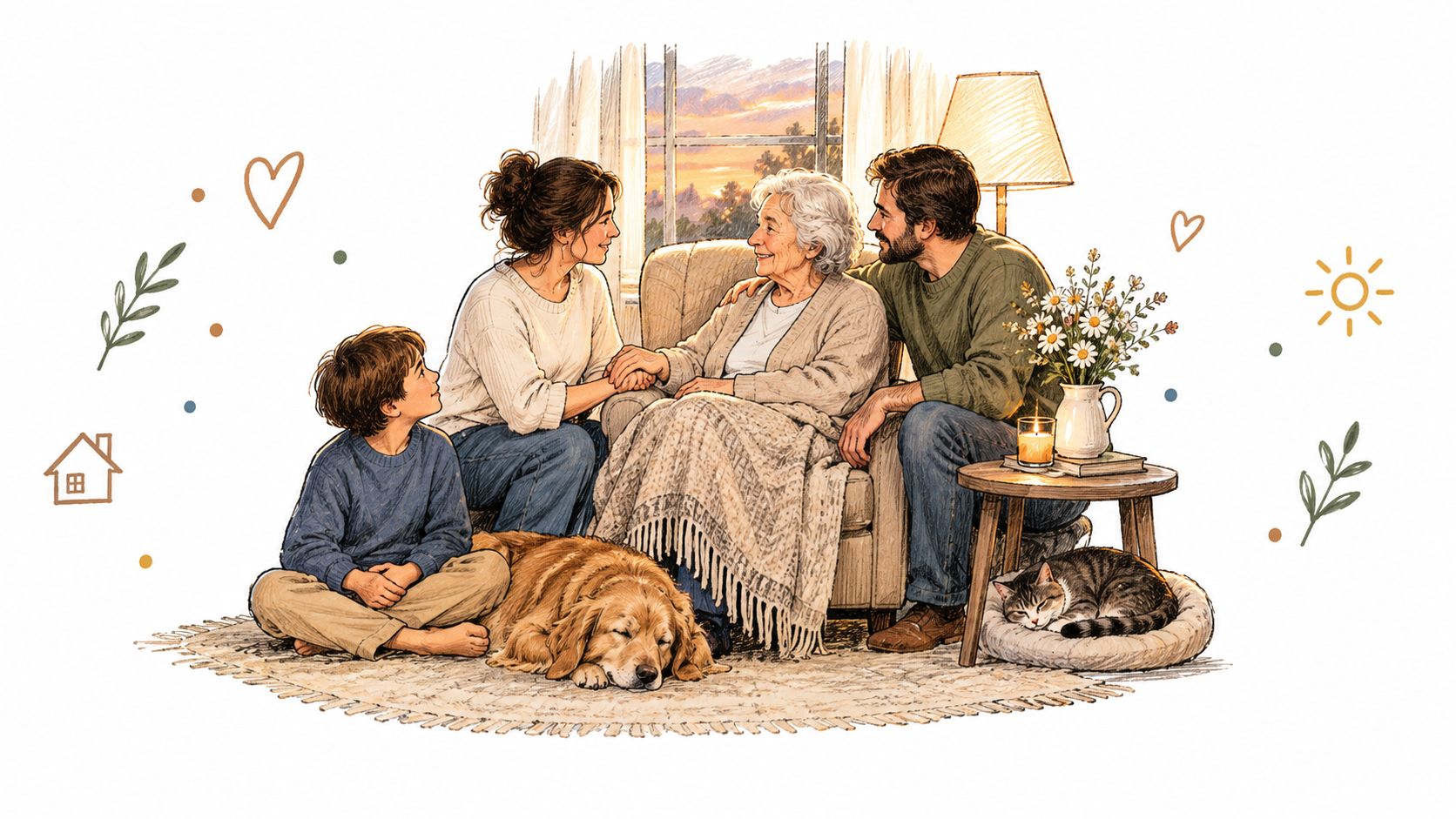
For families, euthanasia at home can offer privacy and breathing room. People can cry freely. They can sit on the floor. They can include children, grandparents, close friends, or keep the moment very small. Some want music. Some want silence. Some want one last nap together on the couch.
Home doesn't make the loss smaller. It can make the experience gentler.
What families are usually hoping for
They aren't searching for perfect words or a perfect plan. They're hoping for a peaceful passing that protects their pet from added stress and gives the family a chance to be fully present.
That hope is reasonable.
A home euthanasia visit isn't about making death feel ordinary. It's about making the process calm, respectful, and less frightening. It allows medical care and deep love to happen in the same room.
You don't need to decide everything at once
One of the biggest burdens families carry is the feeling that they should suddenly know every answer. You don't have to.
You can take this one step at a time:
- First question: Is my pet's comfort declining enough that I need guidance now?
- Next question: Would staying at home reduce stress for my pet?
- Practical question: What would the visit look like?
- Planning question: What do we want afterward for aftercare and remembrance?
Those are steady, manageable questions. A trusted veterinarian can help you work through them without pressure.
Understanding Euthanasia at Home and Why Families Choose It
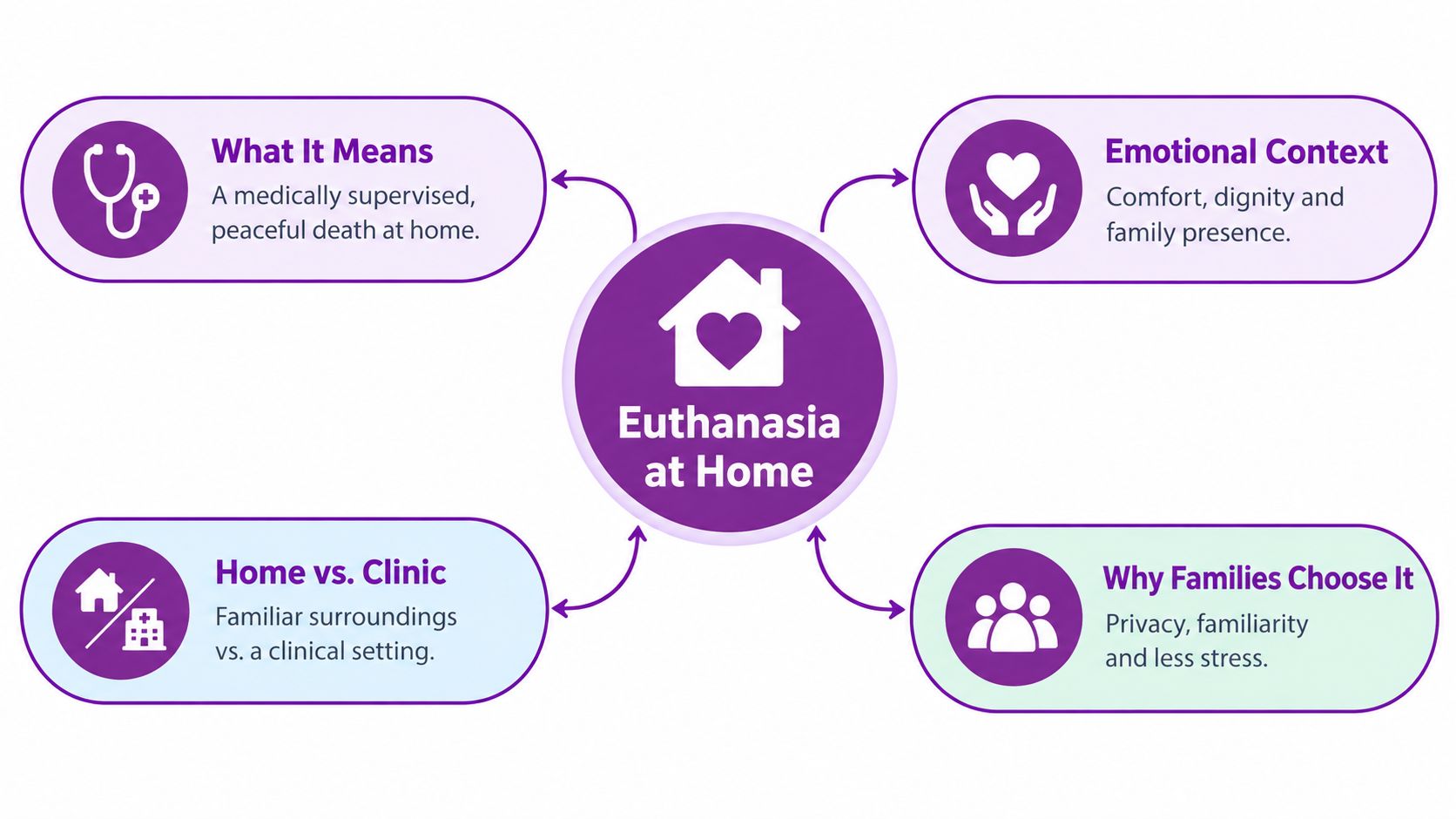
Euthanasia at home means a veterinarian comes to your home and performs the same humane medical act used in a clinic, but in a familiar setting. The endpoint is the same. The difference is the environment around your pet and your family.
What it is medically
Veterinary end-of-life guidance explains that at-home euthanasia commonly includes preliminary sedation or anesthesia before the final injection, and that the euthanasia itself is typically completed with an injectable euthanasia agent, which means the setting changes but the humane medical method does not (AAHA end-of-life event guidance).
That matters because some families worry home care is somehow less medical or less controlled. It isn't. Done well, it is compassionate veterinary care brought to the place where your pet is most at ease.
Why awareness still matters
A surprising number of people still don't realize this option exists. A July 2025 UK survey of 400 dog and cat owners aged 35+ found that 67% had no idea a vet could come to the house for euthanasia, while 94% said they would prefer their pet's final moments to be at home (reported here).
That gap helps explain why families often begin with a very basic question: “Is this even possible where I live?”
How home and clinic compare
Both home and clinic euthanasia can be loving choices. The better option depends on the pet, the medical situation, and the family's needs.
| Setting | What families often value |
|---|---|
| At home | Familiar surroundings, privacy, less travel stress, more personal control |
| In clinic | Access to a known hospital team, immediate equipment, easier fit for urgent medical situations |
A home visit may be especially helpful for pets who are painful, weak, fearful, or distressed by travel. A clinic may be the better fit when a pet is unstable in a way that requires urgent in-hospital care.
Where it fits within hospice care
Hospice and palliative care focus on comfort, symptom relief, and quality of life. Euthanasia at home fits naturally into that approach when comfort can no longer be maintained in a way that feels kind.
Among veterinary professionals involved in hospice and palliative care, a 2021 survey found that 62% said euthanasia was typically performed in the client's home, compared with 21% in the veterinary clinic and 6% in the emergency veterinary clinic. The same survey reported an average of 239 animals per year, with dogs making up 62% and cats 36% of cases (CABI survey findings).
How the Peaceful Passing Process Works Step by Step
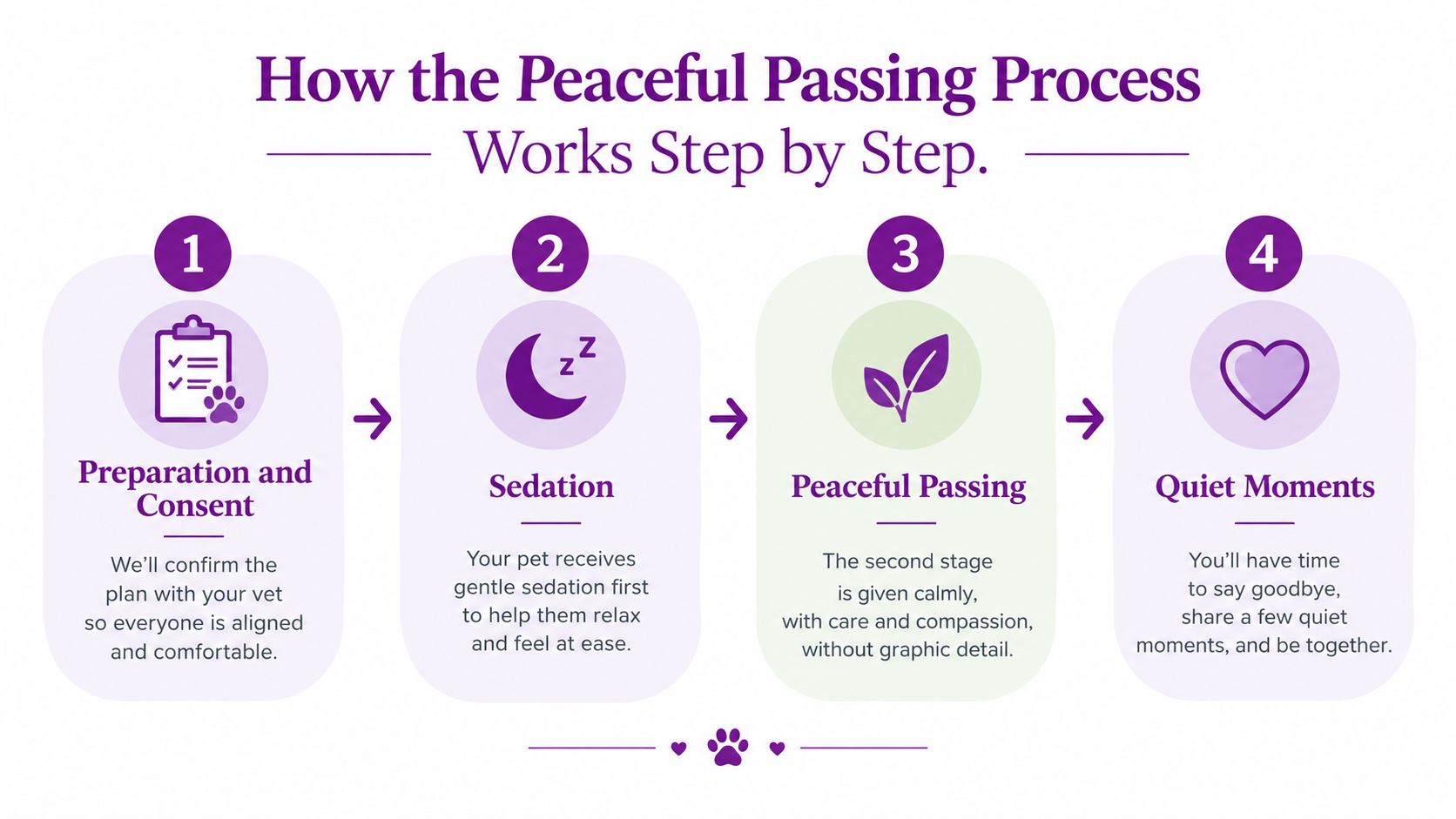
Most families feel calmer once they understand that euthanasia at home is usually a two-stage comfort process, not a sudden single injection. The first stage helps your pet relax. The second stage allows for a peaceful passing.
Step one is comfort first
The preferred technical approach in many situations is sedation followed by IV injectable barbiturates. Veterinary guidance explains that pre-euthanasia sedation or anxiolysis is used first because it reduces stress and anxiety before the final injection (AVMA and AAHA guidance summary).
In plain language, this means the veterinarian doesn't start with the final medication. They begin by helping your pet become sleepy, relaxed, and removed from fear or struggle.
For reactive, fearful, or painful pets, this first stage is especially important. The depth of sedation matters because once a pet is relaxed, handling becomes easier, vein access is smoother, and the chance of distress drops significantly.
Practical rule: If your pet is very anxious, painful, or touch-sensitive, ask how the veterinarian plans to achieve a deep, calm level of sedation before the final step.
What families usually see
The first medication often leads to drowsiness, a softened expression, heavy eyelids, and then sleep. Some pets settle in a parent's lap. Others stretch out and rest their head down. Many families are relieved by this part because it often feels like the pet is drifting into a deeper and more comfortable sleep.
Once the veterinarian confirms your pet is fully sedated, they prepare for the second medication.
If you'd like a more detailed walkthrough, Heartstrings has a plain-language guide on what happens during euthanasia.
Step two is the final injection
Clinical guidance notes that pentobarbital may be given through a needle, butterfly catheter, or indwelling IV catheter. The same guidance recommends a rate of about 1 mL/second in a conscious patient and about 0.1 mL/second in a heavily sedated or anesthetized patient, followed by a saline flush to clear the catheter (AAHA/IAAHPC guideline details).
Families don't need to memorize those numbers. The important point is what they mean. In a sedated patient, careful, controlled administration supports a smoother, gentler experience.
How the home setting changes the technique
At home, pets may be on a bed, couch, rug, or in the yard rather than on a clinic table. That changes the team's positioning and setup, but not the goal. The veterinarian may adjust where they sit, how they place a catheter, or how they support a leg so the flow stays steady and your pet stays undisturbed.
This is one reason the room setup matters. A little physical space around your pet helps the doctor work without repeated repositioning.
The last quiet moments
After the second medication is given, death usually follows peacefully. The veterinarian then confirms that your pet has passed and gives the family private time.
Some families hold their pet. Some brush their fur. Some sit in silence. There is no correct way to spend those first minutes.
The medical steps matter. So does the stillness around them.
Personal Choices That Shape a Comforting Goodbye
The most comforting home visit isn't the one that looks a certain way. It's the one that fits your pet and your family.
Choosing the space
Some pets feel best on the bed where they've always slept. Others settle most easily on a living room rug, under a tree, or in someone's lap. The best place is usually the one that already feels normal to your pet and gives the veterinarian enough room to work comfortably.
A large dog on an upstairs landing may be emotionally meaningful but physically complicated after the passing. A downstairs room or a main-floor porch can sometimes make the day gentler for everyone.
Deciding who should be there
Families often worry about making the “right” choice about children, friends, and other pets. There isn't one answer.
Here are common options people consider:
- Children present: Some families want children included with simple, honest preparation and a trusted adult beside them.
- Children nearby but not in the room: This can help when a child wants connection but not direct involvement.
- Other pets present: Some households find this calming. Others prefer to keep other animals separate until afterward.
- A very small circle: Sometimes two people and a quiet room are exactly right.
Personal touches that can help
These choices don't change the medical outcome, but they often change how held and grounded a family feels.
- Lighting: Soft natural light or lamps can feel less harsh than bright overhead light.
- Sound: Silence, a favorite playlist, or simple background music can all work.
- Objects: A blanket, favorite toy, or well-worn bed can offer familiarity.
- Food and treats: If your veterinarian says it's reasonable, a favorite small treat before sedation may become a tender final memory.
Some families want ceremony. Some want simplicity. Both can be beautiful.
Keepsakes and remembrance in the moment
Many people don't think about keepsakes until they're in the middle of grief. It often helps to decide ahead of time whether you'd like a paw print, a fur clipping, a collar saved aside, or photographs taken before the appointment.
You don't need to create a perfect memorial scene. A paw print made on a kitchen floor can mean just as much as one made in a studio box.
Scheduling Preparation and What to Expect on the Day
The day tends to feel easier when the practical pieces are settled ahead of time. Even a short checklist can protect your attention so you can stay with your pet instead of juggling details.
Before the appointment
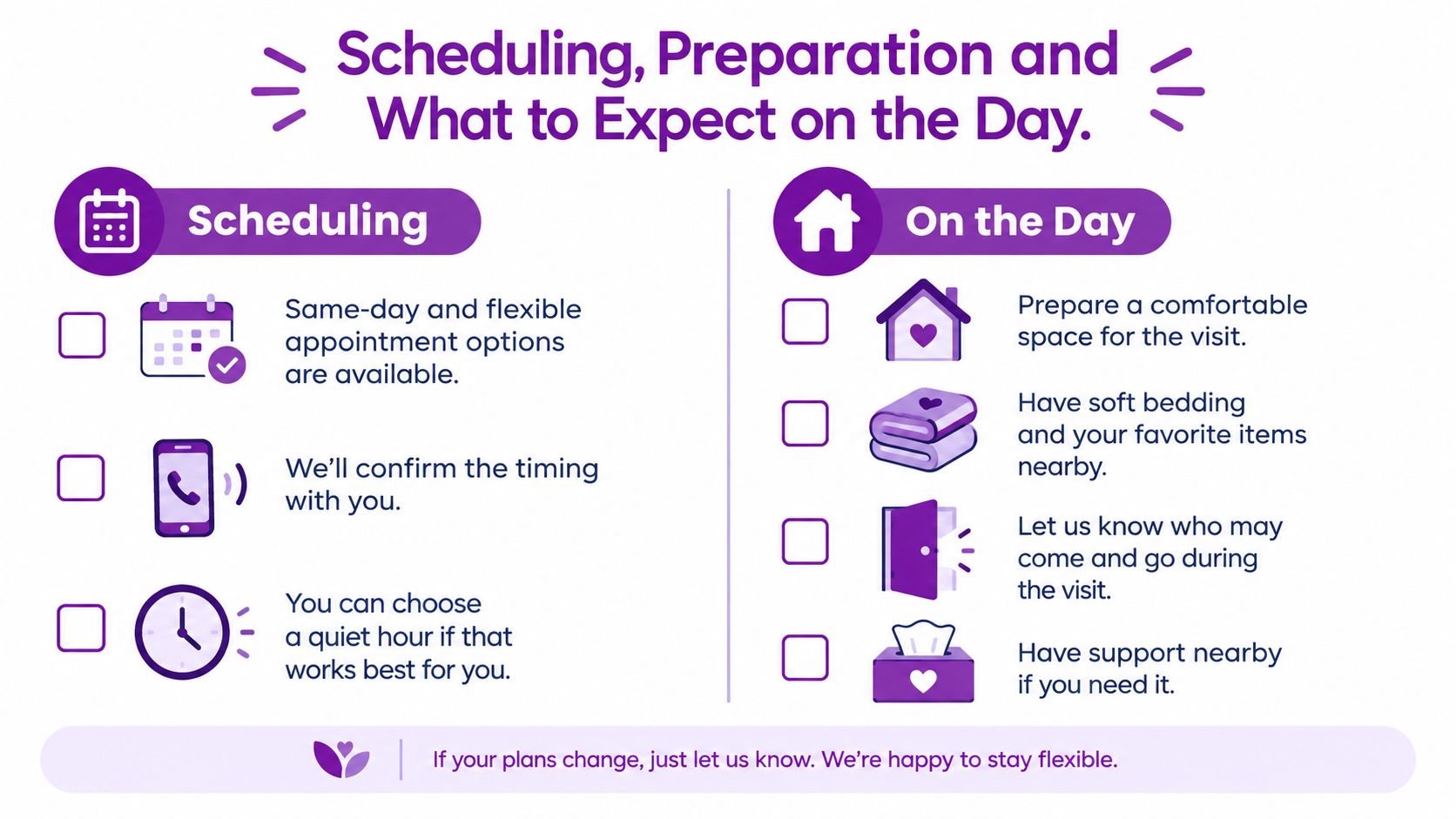
Some providers offer flexible scheduling, and in select areas there may also be same-day availability. If your pet is declining quickly, ask directly what timing options exist and what to do if your pet worsens before the visit.
A clear intake conversation usually covers your pet's condition, mobility, temperament, preferred location in the home, and aftercare wishes. If you want a practical guide for setup, Heartstrings shares helpful suggestions on preparing your home before the doctor arrives.
A simple home checklist
It helps to prepare only what matters.
- Choose the resting place: Pick a quiet, comfortable location with enough room for family and the veterinarian.
- Set out soft bedding: A favorite blanket or bed can make positioning easier.
- Think through arrivals: Silence the doorbell if possible, secure other animals if needed, and make entry easy for the doctor.
- Gather support items: Tissues, water, glasses, and any keepsake items you want used that day.
- Review aftercare plans: Decide as much as you can in advance so you're not forced into fresh decisions in the first moments of grief.
Consent and communication
Veterinary ethics literature emphasizes that the decision should be documented clearly, and that the client's perspective is central because the family knows the animal best. AVMA-linked guidance supports expressing the decision clearly both verbally and in writing through a formal authorization model, and classic quality-of-life guidance recommends recording what makes the animal happy or unhappy so that lived experience remains part of the medical record (AVMA discussion of authorization and quality-of-life documentation).
That paperwork may feel formal on a tender day, but it serves an important purpose. It makes sure everyone understands the plan and that your pet's story, not just their disease, has been heard.
What the visit often feels like
Most home euthanasia visits begin. The veterinarian greets your family, settles in, answers last questions, and confirms consent and aftercare choices before proceeding.
The pace should feel respectful, not rushed. If something doesn't feel clear, ask. Good end-of-life care leaves room for pauses.
Aftercare Cremation and Memorial Options Explained
Aftercare is part of the euthanasia experience. It deserves the same thoughtful planning as the visit itself.
The main aftercare paths
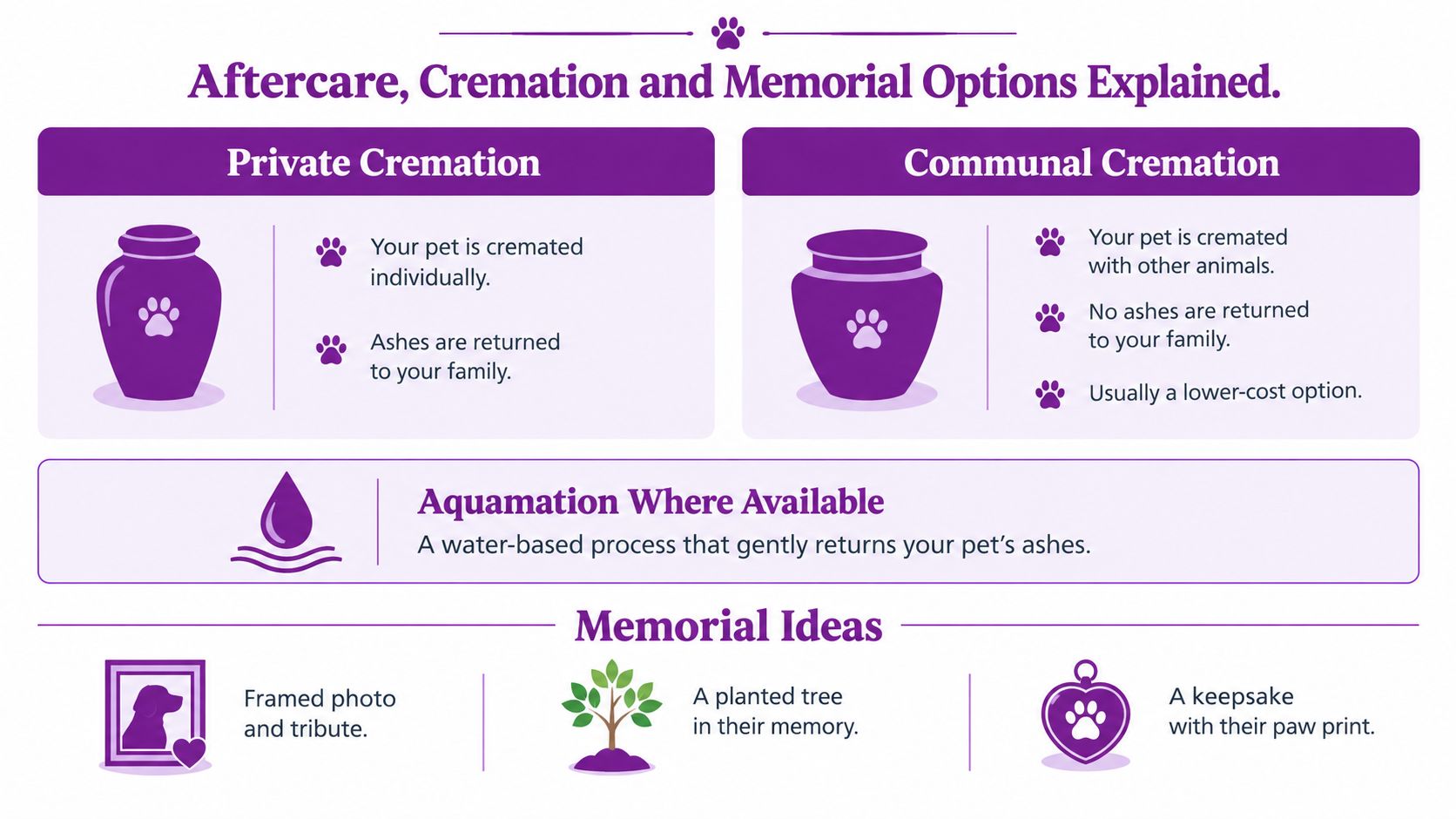
At-home end-of-life guidance notes that, after euthanasia, families may choose options such as cremation or home burial, and that cremation arrangements can be handled by the provider or a partner service. Real-world service pages also show common distinctions such as private cremation with ashes returned versus communal cremation without ashes returned, along with keepsakes like paw prints, fur clippings, urns, or ash-return options (aftercare overview and examples).
A simple way to think about the options:
| Option | What it usually means |
|---|---|
| Private cremation | Your pet is cremated individually, and the ashes are returned |
| Communal cremation | Your pet is cremated with other animals, and ashes are not returned |
| Aquamation | A water-based aftercare option that may be available in some areas |
| Home burial | Sometimes possible, depending on local rules and your property situation |
How planning lowers stress
Grief narrows attention. Even small decisions can feel very hard in the hour after a loss. That's why I encourage families to choose aftercare ahead of time whenever possible.
If you know you want ashes returned, an urn, or a paw print, say so before the visit. If cost matters, say that too. There's nothing unloving about needing practical clarity.
One option some families consider during planning is a provider that coordinates hospice, euthanasia, and aftercare in one process. Heartstrings Pet Hospice & In-Home Euthanasia offers in-home care along with cremation coordination, private and communal options, memorial keepsakes, and telehospice support, which can simplify logistics when families want one team involved across the whole end-of-life journey.
Memorial choices that fit real life
Memorials don't have to be elaborate to be meaningful.
Some families choose:
- A simple urn on a bookshelf beside a photo
- Paw prints or fur clippings tucked into a memory box
- Memorial jewelry that keeps a small reminder close
- A garden ritual such as planting flowers or a small tree
- Custom remembrance gifts for children or family members
If you're looking for thoughtful ideas after the loss of a cat, these personalized feline memory gifts may help spark ideas for a remembrance that feels personal and gentle.
For families who want to understand the return process more clearly, Heartstrings also explains what happens to ashes after cremation.
Quality of Life Guidance Costs and Questions to Ask Your Veterinarian
The hardest part is often not the procedure. It's knowing when comfort-focused hospice is still the kindest path, and when euthanasia may be the kinder one.
Using structure when emotions are loud
Quality-of-life assessment doesn't have to rely on instinct alone. One published study using the Dog Aging Project End of Life Survey asked caregivers to rate the final two weeks of a dog's life on a 7-point Likert scale, from “always bad days” to “always good days.” The same publication notes AVMA guidance that euthanasia may be appropriate when quality of life is seriously impaired, when a pet can no longer enjoy former activities, when pain outweighs pleasure, or when terminal illness or critical injury is present (Dog Aging Project and AVMA quality-of-life guidance).
That kind of structure can help when love makes objectivity difficult.
Write down what your pet still enjoys, what has become hard, and whether comfort is recovering after support or continuing to slip away.
Questions worth asking
Many families also need help with the decision path itself. A 2025 HABI research initiative was launched to identify what support owners need and how they decide among euthanasia, natural death, and hospice care. The same summary notes that caregiver burden, anticipatory grief, depression, stress, and income are linked to euthanasia decision-making (HABI pressroom summary).
These are useful questions to bring to your veterinarian:
- Comfort question: Is my pet comfortable enough to continue hospice right now?
- Trend question: Are we seeing a temporary setback or a steady decline?
- Timing question: What changes would tell us it's time to schedule?
- Logistics question: If we choose euthanasia at home, how quickly can it be arranged?
- Cost question: What fees are separate, including aftercare, ashes return, or keepsakes?
- Support question: If we wait, who do we call after hours if my pet worsens?
A final practical note
A 2023 survey of Australian veterinarians found that 14.9% of non-emergency canine euthanasia cases and 9.4% of emergency cases were performed as a house call or home visit, while most still occurred in clinics. The same study found owners were present in 95.4% of non-emergency euthanasias and 89.9% of emergency euthanasias (Australian euthanasia setting survey). Home euthanasia is a meaningful option, but it's still one choice within a broader spectrum of loving end-of-life care.
If you're unsure, start with a quality-of-life conversation. You don't have to carry the whole decision alone.
If you need help thinking through timing, comfort, or what a peaceful home visit would look like, Heartstrings Pet Hospice & In-Home Euthanasia offers in-home hospice care, telehospice guidance, quality-of-life support, euthanasia at home, and aftercare coordination for families who want a calm, informed plan. Reaching out doesn't commit you to a decision. It gives you a compassionate place to ask questions and care well for your beloved companion.